
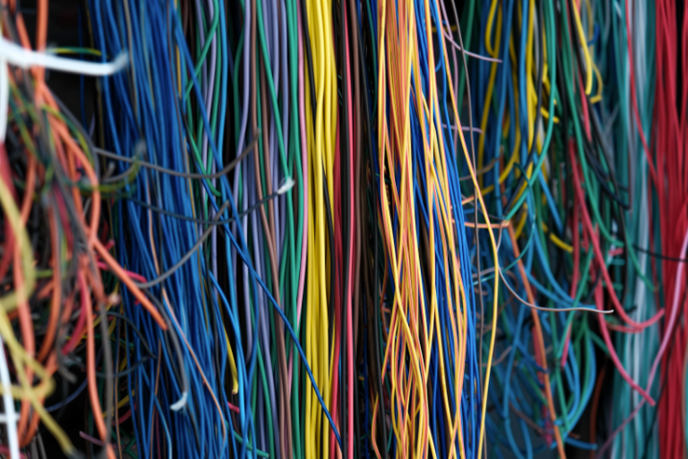
Building a reliable data center starts with the right foundation, and cabling sits at the heart of that foundation. The wrong choices can slow down performance, complicate maintenance, and add long-term operational costs. A clear understanding of data center cabling helps teams design a network that is fast, scalable, consistent, and easy to manage.
This updated guide walks through the major cabling systems used in modern facilities, how they differ, and the data center cabling best practices that support long-term efficiency.
Why Cabling Matters in a Data Center
A data center houses large volumes of equipment: servers, switches, storage systems, security appliances, monitoring devices, and more. All of them depend on high-speed connectivity. Solid cabling creates:
- predictable network performance
- stable connections across critical workloads
- easier expansion as needs grow
- reduced downtime caused by physical failures
- cleaner organization that simplifies troubleshooting
Following recognized data center cabling standards also keeps operations consistent and supports future upgrades.
Structured Cabling: The Backbone of Every Data Center
Most modern facilities are designed around structured cabling, a standardized framework that organizes cables into independent subsystems. This creates a unified architecture instead of a tangled, device-to-device setup.
A structured system typically includes:
- Entrance facility and backbone cabling
- Vertical and horizontal distribution
- Patch panels
- Equipment racks and cabinets
- Cable pathways and trays
The benefit is predictability. Adding a new server or switching out an appliance becomes straightforward because the cabling layout already follows a universal logic.
Structured cabling also supports mixed media, like fiber optic cabling and copper cabling, without compromising organization.
Fiber Optic Cabling for High-Speed Connections
As data centers scale, demand for bandwidth and low latency continues to rise. This is where fiber optic cabling stands out.
Key Advantages of Fiber
- High bandwidth for large workloads and dense virtualization
- Long-distance transmission without significant signal loss
- Resistance to electromagnetic interference
- Better performance for cloud connectivity and high-throughput applications
You’ll typically see fiber used for:
- Switch-to-switch links
- Backbone networks
- Aggregation layers
- Storage area networks
Common Types in a Data Center
Single-mode fiber (SMF)
– Best for long-distance connections and inter-building links.
– Supports very high bandwidth and long transmission ranges.
Multi-mode fiber (MMF)
– Common for short-distance, high-speed links inside the facility.
– Often paired with VCSEL-based optics for cost efficiency.
As more data centers shift to 40G, 100G, and 400G speeds, fiber continues to be the preferred medium.
Copper Cabling for Short-Distance Reliability
While fiber dominates high-speed applications, copper cabling still plays an important role. It’s budget-friendly, easy to terminate, and ideal for short-distance runs.
Where Copper Fits Best
- Server-to-switch connections
- Patch panels and top-of-rack configurations
- Power-over-Ethernet devices
- Management ports
Common Copper Types
Cat6 and Cat6A
Supports gigabit and multi-gigabit speeds. Cat6A is widely used in new installations for 10G up to 100 meters.
Cat7 and Cat8
Used for advanced environments that need higher frequencies, shielding, and support for 25G to 40G short-distance links.
Copper also helps maintain flexibility in dynamic server environments where devices change frequently.
Data Center Cabling Standards
Industry standards help maintain consistent performance, reduce compatibility issues, and simplify maintenance. The most common frameworks include:
- TIA-942 for data center layout and cabling topology
- ISO/IEC 11801 for structured cable design
- ANSI/TIA-568 for copper and fiber performance specifications
- IEEE standards for Ethernet and network transmission
Staying aligned with these guidelines supports scalability and minimizes costly redesigns down the line.
Data Center Cable Management
Clean organization isn’t just a visual benefit. Proper data center cable management protects equipment, improves airflow, prevents cable damage, and speeds up maintenance.
Strong cable management includes:
- Labeling systems for easy identification
- Color coding for different cable types
- Velcro ties instead of zip ties to prevent pinching
- Dedicated trays and pathways for routing
- Controlled bend radius for fiber
- Avoiding overcrowding in ducts and racks
- Rack layouts that separate power and data cables
Good management also lowers the chance of accidental unplugging or human error.
Data Center Cabling Best Practices
Teams designing or upgrading a facility follow these recognized best practices:
1. Plan with scalability in mind
Bandwidth demands increase over time. A thoughtful design supports future technologies like 100G and 400G optics.
2. Use structured cabling for consistency
This makes ongoing changes easier, reduces clutter, and improves predictability.
3. Choose the right medium for each connection
Use fiber optic cabling for backbone and high-speed needs, and copper cabling for short, cost-efficient runs.
4. Keep patch cords short and organized
This improves airflow and reduces cable stress.
5. Maintain clear labeling
A well-documented system can save hours during troubleshooting.
6. Follow all cooling and airflow requirements
Poor cable routing can block airflow and increase rack temperatures.
7. Regularly audit your cabling
A periodic review helps spot damaged connectors, broken labels, and overloaded trays.
How BCS Consultants Supports Data Center Cabling Projects
BCS Consultants helps businesses design and deploy cabling systems that meet today’s performance requirements and prepare you for tomorrow’s upgrades. Our team specializes in:
- Structured cabling design
- Fiber and copper installation
- Data center expansion and modernization
- Rack and cable management
- Testing, diagnostics, and certification
- Integration with network and AV systems
Clients rely on us because we approach cabling with long-term performance and operational stability in mind.
Final Thoughts
Strong data center cabling sets the stage for a reliable, scalable, and high-performance facility. With the right mix of structured cabling, fiber optic cabling, and copper cabling, along with adherence to data center cabling standards and solid cable management practices, organizations gain a network foundation built for growth.
If you’d like help redesigning, upgrading, or expanding your cabling infrastructure, the BCS Consultants team is ready to assist.
Contact us at +1 (949)-304-6036 to discuss your data center project.