
Modern organizations expect more from their security infrastructure than simple monitoring or access control. Today’s environments require intelligent systems that improve security, streamline operations, and enhance the visitor experience.
Recent innovations from Verkada reflect this shift. New capabilities across intercom and video security systems introduce AI-driven communication tools, simplified deployment methods, and enhanced real-time safety monitoring.
For organizations managing busy facilities, such as hospitals, corporate campuses, schools, and multi-tenant buildings, these advancements represent a meaningful step toward smarter and more responsive physical security systems.
Simplifying Intercom Deployment at Scale
Installing entry systems across multiple doors or buildings can quickly become complex, especially when cabling, power supplies, and access control integrations are involved.
Verkada has introduced several enhancements designed to simplify intercom installation while strengthening physical security.
Security Relay Accessory
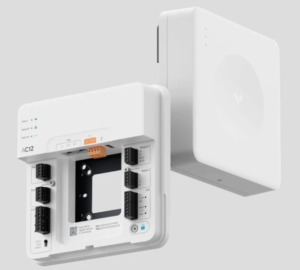
A new Security Relay accessory helps address two common challenges when intercoms are used as door controllers.
First, it simplifies the process of powering door locks. Traditionally, installers needed to add an external power supply and additional wiring to support locking hardware. The security relay integrates this functionality, reducing hardware requirements and simplifying the overall installation.
Second, it enhances security by relocating sensitive relay circuitry to the secure interior side of the door. If an intercom device mounted outside were tampered with or removed, the internal wiring that controls the door lock remains protected.
This design helps prevent attempts to manipulate door control wiring while also reducing deployment complexity.
Reader Over Network Technology
Another improvement focuses on reducing cabling requirements when integrating intercoms with access control systems.
Historically, credential readers required a direct wired connection to access control controllers, often using RS-485 cabling. This meant installers needed to route additional wiring through walls and infrastructure.
With Reader over Network, credential scans can now travel across the existing local network instead. A single CAT6 cable can provide both power and connectivity, allowing the intercom to communicate with the access control system without dedicated point-to-point wiring.
For organizations deploying entry systems across many locations, this approach can significantly reduce:
- installation time
- infrastructure complexity
- labor and cabling costs
The result is a more scalable path for organizations expanding access control across multiple buildings or campuses.
AI-Powered Communication at the Door

Intercom systems serve as the first point of contact for many visitors. In busy or multilingual environments, communication barriers can slow entry processes and create frustration.
To address this challenge, Verkada has introduced AI-powered communication capabilities designed to make interactions at entry points faster and more intuitive.
Live Translation for Multilingual Environments
Facilities such as hospitals, airports, universities, and public institutions often serve people who speak different languages.
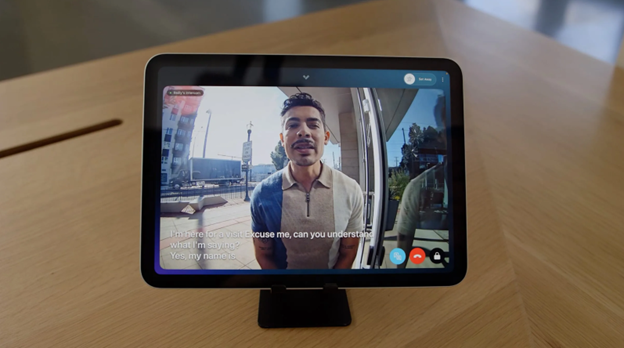
The new live translation capability allows intercom conversations to be translated in real time between visitors and staff. When a language mismatch is detected, the system can translate both speech and on-screen captions, helping ensure both parties clearly understand each other.
Key aspects of the feature include:
- real-time two-way translation
- natural voice playback alongside captions
- automatic language detection
- preserved audio context to maintain tone and clarity
By removing language barriers at entry points, organizations can create more inclusive and efficient visitor experiences.
AI-Powered Voice Directory
Large buildings and multi-tenant facilities often rely on directories to route visitors to the right person or department. However, guests may not know the exact name, extension, or location they need.
An AI-powered voice directory solves this by allowing visitors to simply speak their request.
For example, a guest might say:
- “I’m here for a delivery.”
- “I need the accounting department.”
- “I’m meeting Mark Johnson.”
The system analyzes the request and routes the call to the appropriate contact configured within the platform. If the request is unclear—such as multiple people sharing the same name—the system asks clarifying questions to identify the correct destination.
This conversational interface allows organizations to support self-service visitor interactions, reducing the need for constant receptionist involvement while still ensuring guests are connected quickly.
AI Detection for Faster Security Response
Beyond communication and access control, artificial intelligence is also expanding how security teams detect and respond to incidents.
One new development introduces AI-based fighting detection within video security systems.
Using a specialized detection model, cameras can now identify behaviors associated with physical altercations, including actions like pushing, punching, or wrestling. When such activity is detected, security personnel can receive near real-time alerts.
This capability enables security teams to:
- respond more quickly to incidents
- intervene before situations escalate
- easily locate and review relevant footage afterward
Environments such as schools, retail centers, correctional facilities, and public venues can particularly benefit from this type of proactive monitoring.
The Evolution of Intelligent Security Systems
The latest developments across intercom and video technologies highlight a broader shift in physical security.
Instead of relying solely on manual monitoring or static infrastructure, organizations are adopting systems that combine:
- cloud-based management
- artificial intelligence
- scalable networking
- integrated access control
These technologies help security teams improve response times, simplify operations, and enhance visitor experiences across complex facilities.
Security and access systems are evolving rapidly, and organizations increasingly expect solutions that do more than simply monitor entry points.
Innovations such as simplified intercom deployment, AI-powered communication tools, and intelligent activity detection are transforming how facilities manage both security and visitor interactions.
By combining modern infrastructure with advanced software capabilities, organizations can create safer, more efficient, and more welcoming environments for staff, visitors, and security teams alike.
Discover how BCS Consultants helps organizations design and deploy integrated security solutions powered by modern platforms like Verkada.
You must be logged in to post a comment.