
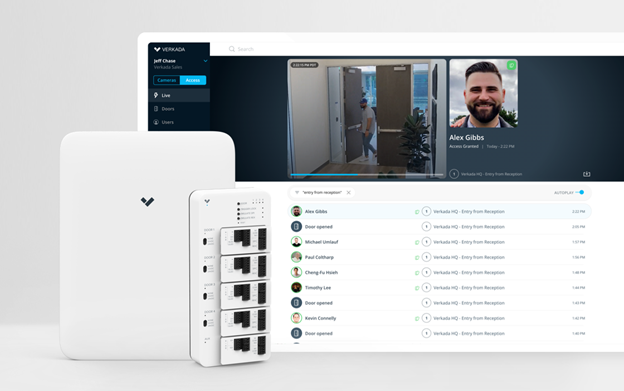
Security expectations have changed. Organizations today must manage multi-site operations, hybrid workforces, compliance requirements, and evolving physical threats — all while maintaining operational efficiency.
Traditional on-premise security systems, built around local servers and siloed monitoring tools, struggle to keep pace. That’s why forward-thinking organizations are transitioning to Cloud-Based Video and Access Control — a unified, scalable approach that centralizes security management while improving visibility and response times.
At BCS Consultants, we help organizations across Irvine and Southern California modernize their infrastructure with intelligent, cloud-driven security strategies that protect people, property, and operations.
What Is Cloud-Based Video and Access Control?
Cloud-Based Video and Access Control integrates:
- A cloud-based video surveillance system
- Modern cloud-based access control systems
- Centralized cloud management software
Instead of relying on on-site servers, security data is securely hosted and managed in the cloud. Administrators can monitor live video, manage door permissions, run reports, and respond to incidents from virtually anywhere.
Core Components
- IP cameras connected to secure cloud storage
- Smart door controllers that authenticate credentials via cloud platforms
- Web and mobile dashboards for administrators
- Encrypted data transmission between devices and servers
This approach transforms security from a location-bound system into a centralized, flexible platform.
Why Organizations in Irvine Are Moving to the Cloud
Irvine is home to technology firms, healthcare providers, life sciences companies, educational institutions, and commercial real estate developments. These organizations require:
- Multi-location visibility
- Strong cybersecurity alignment
- Scalable infrastructure
- Reduced IT burden
A cloud-based access control solution addresses these needs by removing dependency on on-site hardware while maintaining enterprise-grade protection.
Key Benefits of Cloud-Based Security Systems
1. Centralized Remote Management
Security teams can manage credentials, monitor events, and view live or recorded footage from any authorized device.
For businesses operating across multiple Irvine locations — or throughout Southern California — this eliminates the need for local administrators at every site.
2. Scalability Without Hardware Overload
Traditional systems require:
- Server rooms
- Dedicated IT resources
- Complex upgrades
Cloud based access control systems allow organizations to add:
- New doors
- Additional cameras
- Expanded facilities
…without installing major server infrastructure.
This is particularly beneficial for growing enterprises and commercial real estate portfolios.
3. Lower Total Cost of Ownership
Cloud systems reduce:
- Upfront capital expenditures
- Server maintenance costs
- Software upgrade fees
- Downtime risks
Instead of periodic large hardware investments, organizations shift to predictable operational models.
For companies deploying commercial video surveillance, this creates long-term financial efficiency.
4. Real-Time Alerts & Faster Incident Response
With a unified cloud platform:
- Access events trigger instant alerts
- Video footage links directly to entry logs
- Administrators can initiate lockdown procedures remotely
When a door is forced open or an unauthorized credential is used, security teams immediately receive context-backed notifications.
This integrated workflow significantly reduces investigation time.
5. Improved Data & Analytics
Modern cloud-based video surveillance platforms offer:
- Motion analytics
- AI-powered anomaly detection
- Behavioral pattern tracking
- Custom reporting dashboards
Instead of simply recording events, organizations gain actionable intelligence.
How Cloud-Based Video and Access Work Together
Understanding integration is key.
Example Workflow
- An employee scans a credential.
- The cloud platform verifies permissions.
- The door unlocks.
- The event is logged in the system.
- Associated video footage is automatically indexed.
- Administrators can review both access logs and footage in one interface.
This convergence eliminates siloed systems and dramatically improves oversight.
Cloud vs. On-Premise vs. Hybrid Systems
| Feature | On-Premise | Hybrid | Full Cloud |
|---|---|---|---|
| On-site servers | Required | Partial | Not required |
| Remote access | Limited | Yes | Full |
| Automatic updates | Manual | Partial | Yes |
| Scalability | Hardware dependent | Moderate | High |
| IT overhead | High | Moderate | Lower |
For organizations in Irvine looking for long-term adaptability, full cloud deployments typically provide the greatest operational flexibility.
What Happens During Internet Outages?
A common concern is connectivity dependency.
Modern cloud-based access control systems include:
- Local credential caching
- Offline operation modes
- Automatic data synchronization once connectivity is restored
Similarly, many cloud based video surveillance systems temporarily store footage locally and upload once connections resume.
Security continuity is preserved.
Cybersecurity & Compliance Considerations
Because cloud systems operate over networks, cybersecurity must be integrated into deployment.
Key security measures include:
- End-to-end encryption
- Multi-factor authentication
- Role-based access control
- Secure credential management
- Audit log retention
For healthcare, finance, or regulated industries in California, compliance alignment is essential. BCS Consultants ensures all solutions align with industry and cybersecurity best practices.
Commercial Use Cases
Corporate Offices
- Badge management
- Visitor monitoring
- After-hours access control
Healthcare & Life Sciences
- Restricted lab zones
- Patient data-sensitive environments
- Emergency lockdown protocols
Education Campuses
- Multi-building oversight
- Integrated emergency response
- Visitor screening
Commercial Real Estate
- Tenant credential management
- Centralized property surveillance
- Remote access adjustments
Each environment benefits from integrated cloud-based video surveillance and access oversight.
ROI Framework for Decision Makers
When evaluating Cloud-Based Video and Access Control, leadership teams should assess:
Direct Savings
- Reduced hardware investments
- Lower maintenance requirements
- Automatic updates included
Operational Gains
- Faster investigations
- Reduced liability exposure
- Improved employee and tenant experience
Strategic Value
- Scalability for future growth
- Integration with smart building systems
- Enhanced risk management
Cloud migration often becomes a strategic security upgrade rather than a simple equipment replacement.
Migration Strategy
Step 1: Infrastructure Audit
Assess cameras, door hardware, network capacity.
Step 2: Compatibility Planning
Determine integration options with existing systems.
Step 3: Phased Rollout
Deploy in high-priority zones first.
Step 4: Staff Training
Ensure teams understand dashboards and response workflows.
Step 5: Ongoing Optimization
Use analytics data to refine security policies.
BCS Consultants guides clients through each stage to ensure minimal disruption and maximum ROI.
Future Trends in Cloud Security
Security innovation continues to accelerate.
Expect advancements such as:
- AI-driven behavioral monitoring
- Predictive threat analytics
- Mobile-first credentialing
- Deeper integration with building automation systems
- Cloud-native cybersecurity enhancements
Organizations that adopt cloud infrastructure today position themselves for future-ready protection.
Why Choose BCS Consultants?
Technology alone does not create effective security. Strategic planning, integration expertise, and operational alignment are critical.
BCS Consultants provides:
- Comprehensive security assessments
- Vendor-neutral system design
- Enterprise-grade cloud integrations
- Compliance-conscious deployments
- Ongoing system optimization
For businesses in Irvine, we design and deploy advanced cloud-based access control solutions and commercial video surveillance systems built to scale.
Conclusion
The transition to Cloud-Based Video and Access Control represents a fundamental shift in how organizations manage security.
By combining:
- Centralized cloud management
- Integrated video verification
- Remote credential control
- Real-time alerts
- Scalable infrastructure
…organizations gain operational agility, improved visibility, and stronger risk mitigation.
For companies evaluating a cloud-based video surveillance system or modernizing legacy cloud-based access control systems, the cloud is no longer optional — it’s strategic.
BCS Consultants is ready to help your organization modernize, protect, and scale with confidence.
If your organization is ready to implement or upgrade to a unified cloud-based video and access control platform, contact BCS Consultants today to schedule a consultation and design a future-ready security strategy.
Frequently Asked Questions
1. Is cloud-based video and access control secure from cyber threats?
Yes — when properly configured. Modern cloud-based video and access control platforms use end-to-end encryption, multi-factor authentication (MFA), role-based permissions, and secure data centers. In many cases, cloud providers maintain stronger cybersecurity protocols than on-site server environments because updates and patches are deployed automatically. Organizations should verify compliance certifications (such as SOC 2) and ensure proper network segmentation for maximum protection.
2. What happens to access control if the internet goes down?
Most modern cloud-based access control systems include offline failover capabilities. Local controllers cache credential data so authorized users can still enter during temporary outages. Once internet connectivity is restored, the system automatically syncs event logs and updates. This ensures business continuity even in unexpected network disruptions.
3. Is a cloud-based video surveillance system more cost-effective than traditional systems?
In many cases, yes. While cloud systems may involve subscription pricing, they significantly reduce upfront capital expenses, server maintenance, IT labor, and upgrade costs. Over time, the predictable operating model and reduced infrastructure burden often lower total cost of ownership — especially for multi-location commercial organizations.
4. Can cloud-based video and access control integrate with existing security systems?
Most modern cloud platforms are designed with open APIs and integration capabilities. They can often connect with existing cameras, door hardware, alarm systems, visitor management software, and even building automation systems. However, compatibility depends on the age and architecture of the current system, so a professional assessment is recommended before migration.