
Most government security teams aren't protecting one building, they're protecting dozens, sometimes hundreds, spread across city halls, schools, transit hubs, utility yards, and administrative offices, usually with a security staff too small for the job. Add procurement rules that can slow down even a routine camera upgrade by months, and it's easy to see why so many agencies are still running security on hardware that's a decade old.
Verkada has just made that upgrade path a little easier. The company has achieved GovRAMP Moderate Authorization, a milestone that matters more for what it removes, friction in the procurement process, than for what it adds technically.
Why So Many Agencies Are Stuck on Old Hardware
A few things tend to compound at once in public sector security:
The infrastructure itself is aging. DVRs, NVRs, on-prem servers, VPN tunnels for remote access, these systems work, technically, but they're expensive to maintain and don't flex well when an agency needs to add a site or change how a building is used.
Nobody has a clear view across sites. When a security team is responsible for 50 or 200 locations and each one has its own local system, checking on an incident somewhere across the county means logging into a different server, sometimes a different VPN, just to pull footage.
Cybersecurity compliance is its own project. Before an agency can even evaluate a cloud platform, it typically has to confirm the vendor meets a specific security framework, and that review process alone can add months to a purchase that should've taken weeks.
GovRAMP Moderate Authorization is aimed directly at that third problem.
What GovRAMP Actually Is
GovRAMP (formerly StateRAMP) is the standardized cybersecurity authorization program for cloud vendors selling into state, local, tribal, and education (SLED) government. Rather than each city, county, or school district running its own independent security review of a vendor, GovRAMP centralizes that review once, through independent assessment, documented controls, and continuous monitoring, and agencies can rely on that single authorization instead of re-litigating it every time.
For Verkada, this builds on a broader public sector compliance track record that also includes FedRAMP Moderate Authorization (achieved for its Command Platform hosted in AWS GovCloud, sponsored by the U.S. Department of Energy) and TX-RAMP Level 2 Certification, Texas's own state-specific framework, which recognizes GovRAMP through automatic reciprocity. In practice, that means an agency evaluating Verkada doesn't have to start its security review from zero. Much of the heavy lifting has already been done.
What Agencies Actually Get With the Platform
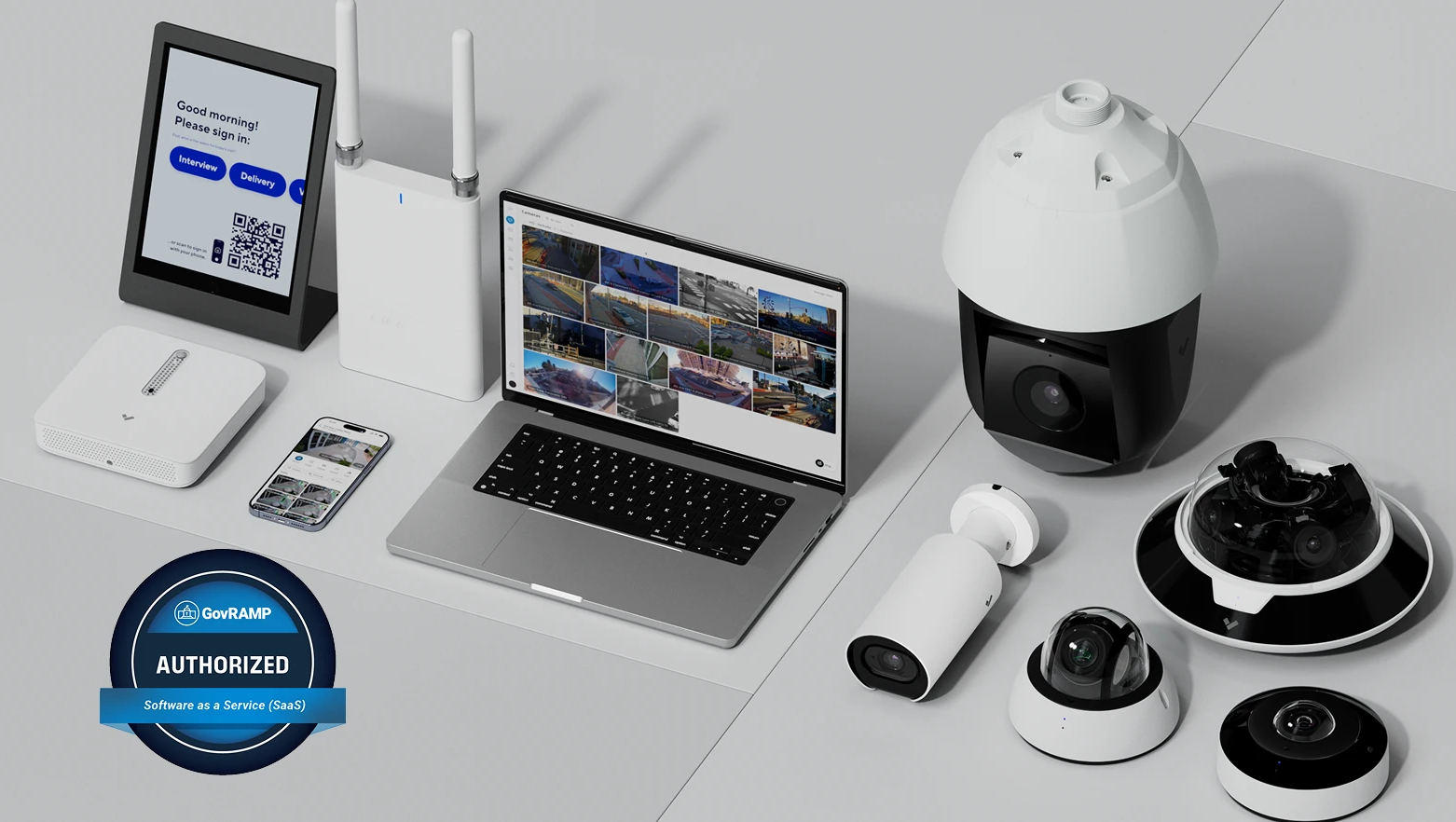
Compliance aside, the practical draw for public sector IT and security teams is a single platform instead of a pile of disconnected ones. Verkada's cloud-managed system lets agencies handle video, access control, visitor check-in, and even indoor air quality monitoring from one interface, across every site, not just the ones with the newest equipment.
A few pieces worth knowing:
- Video security, cameras with onboard storage and secure cloud access, so footage stays available without agencies having to maintain server rooms full of NVRs.
- Access control, doors, credentials, and permissions managed centrally, whether that's one building or fifty.
- Visitor management, digital check-in that gives front-office staff and security teams a real record of who's in the building, which matters a lot more in a school or courthouse than it does in a typical office.
- Air quality sensors, not security in the traditional sense, but useful for agencies responsible for the health and safety of the buildings they run.
- Cellular gateways, connectivity for remote sites like water treatment plants or rural facilities where running new wiring isn't realistic.
Security That Doesn't Depend on Trusting the Network
None of this is worth much without the platform itself being secure, so it's worth noting what's actually built in: Zero Trust architecture, multi-factor authentication, single sign-on, role-based access, encryption for data at rest and in transit, and audit logging that gives agencies a real trail when they need to answer for who accessed what and when.
What This Actually Changes for a Procurement Team
The honest version of "why this matters" isn't dramatic, it's mostly about time and duplicated effort. An authorization like this means a security review an agency would otherwise have to run itself is largely already done. That translates to faster procurement cycles, less redundant paperwork during security review, and a shorter runway between deciding to modernize and actually doing it.
Where BCS Consultants Fits In
Compliance gets a security platform through the door. It doesn't install the cameras, configure access permissions across three buildings with different network setups, or train front-desk staff on the new visitor system. That part still takes a team that's done it before.
BCS Consultants works with government agencies, municipalities, school districts, and public institutions to plan and deploy physical security systems that actually match how each site operates, not a one-size-fits-all rollout. Whether it's video surveillance for a single administrative building or an access control overhaul across a whole district, we handle the parts that turn a compliant platform into a security system that actually works day to day.
Modernizing your agency's security infrastructure? Talk to BCS Consultants about deploying a Verkada solution built around how your facilities actually operate.
