
-
Introduction to Structured Cabling Systems
Reliable communication networks are essential for businesses that depend on uninterrupted connectivity, secure data transfer, cloud applications, and digital collaboration tools. Offices, data centers, healthcare facilities, educational institutions, and industrial environments all require strong network infrastructure to support daily operations. A professionally designed structured cabling system helps organizations maintain stable performance while simplifying network management and future expansion.
Structured cabling refers to a standardized method of organizing cables, hardware, and connectivity devices into a unified telecommunications infrastructure. Instead of using scattered wiring systems that become difficult to maintain over time, Structured Cabling Systems create an organized framework capable of supporting voice, video, data, and other communication services efficiently.
Businesses often partner with a trusted data cabling company to install scalable and high-performance network infrastructure. A properly installed cabling system improves network reliability, reduces downtime, simplifies troubleshooting, and allows easier integration of new technologies.
Modern organizations require more bandwidth and faster communication than ever before. Remote work environments, smart office technology, cloud computing, and IoT devices continue to increase pressure on network systems. Poorly organized or outdated cabling can lead to signal interference, connectivity issues, and expensive maintenance costs. Professional data cabling solutions help businesses overcome these challenges by creating organized and future-ready infrastructures.
Structured cabling systems include several critical components such as patch panels, switches, routers, fiber optic cables, Ethernet cables, racks, wireless access points, and security devices. Each component contributes to efficient communication and network performance.
Investing in reliable data cabling services allows businesses to create scalable infrastructures that support long-term growth and technological advancements.
2. Core Devices in Structured Cabling
Structured cabling infrastructure depends on several key networking devices that manage communication and ensure efficient data transfer throughout the network.
Patch Panels and Their Role
Patch panels are essential for organizing network connections within a structured cabling system. They act as centralized points where cables terminate and connect to networking equipment such as switches and routers.
Instead of connecting long horizontal cables directly into active devices, technicians use patch panels and short patch cords to create organized and manageable connections. This setup improves accessibility and simplifies future modifications.
Patch panels also make troubleshooting easier because technicians can quickly identify and isolate connection problems without disrupting the entire network. Businesses working with experienced structured cabling contractors often prioritize high-quality patch panels to improve cable organization and operational efficiency.
Network Switches and Hubs
Network switches control the flow of data between connected devices within a network. Unlike traditional hubs that broadcast information to every connected device, switches intelligently direct data only to the intended recipient. This improves network speed, minimizes traffic congestion, and increases efficiency.
Managed switches provide advanced features such as:
- VLAN support
- Traffic prioritization
- Remote management
- Security monitoring
- Bandwidth optimization
Although hubs still exist in some older environments, modern Structured Cabling Systems primarily rely on switches because they provide better performance and improved security.
Routers and Connectivity Devices
Routers connect internal networks to external networks such as the internet. They manage incoming and outgoing traffic while ensuring data reaches the correct destination.
Additional connectivity devices used in structured cabling environments include:
- Network gateways
- Modems
- Signal repeaters
- Controllers
Choosing the right networking hardware is critical for maintaining stable communication and supporting future expansion. A professional data cabling company can help businesses identify networking devices that match their operational requirements and bandwidth demands.
3. Cabling and Connectivity Components
The cabling infrastructure forms the physical foundation of a network system. Selecting appropriate cables and connectivity components is essential for ensuring speed, reliability, and scalability.
Types of Cables (Ethernet and Fiber Optic)
Ethernet Cables
Ethernet cables remain one of the most commonly used networking solutions for commercial environments. Different cable categories support varying speeds and bandwidth capacities.
Common Ethernet cable types include:
- Cat5e – Suitable for basic gigabit networking
- Cat6 – Supports higher speeds and reduced interference
- Cat6a – Improved shielding and bandwidth performance
- Cat7 – Designed for high-speed enterprise applications
Ethernet cabling is cost-effective and works well for most office and commercial networking environments.
Fiber Optic Cables
Fiber optic cables transmit data using light signals rather than electrical signals. They offer significantly faster transmission speeds and higher bandwidth compared to copper cabling.
Benefits of fiber optic cabling include:
- Faster data transfer rates
- Long-distance communication
- Resistance to electromagnetic interference
- Improved reliability
Fiber optic systems are commonly used in enterprise campuses, data centers, and high-bandwidth environments.
Many data cabling contractors recommend combining copper and fiber cabling to create flexible and future-ready infrastructures.
Connectors, Jacks, and Outlets
Connectors and jacks establish secure communication links between cables and devices. RJ45 connectors are commonly used for Ethernet systems, while LC and SC connectors are standard in fiber optic environments.
Wall outlets and keystone jacks provide convenient access points while helping maintain organized cable routing.
High-quality connectors reduce signal loss and improve overall network stability.
Patch Cords and Cross-Connects
Patch cords are short cables used to connect devices such as switches and patch panels. Cross-connect systems provide centralized management for network connections and simplify reconfiguration processes.
These components improve flexibility and allow network administrators to make changes without altering permanent cabling infrastructure.
Professional data cabling services ensure that all connectivity components are properly installed and tested for maximum reliability.
4. Supporting Hardware and Infrastructure
Structured cabling systems require supporting hardware that protects equipment, organizes cables, and improves operational efficiency.
Racks, Cabinets, and Enclosures
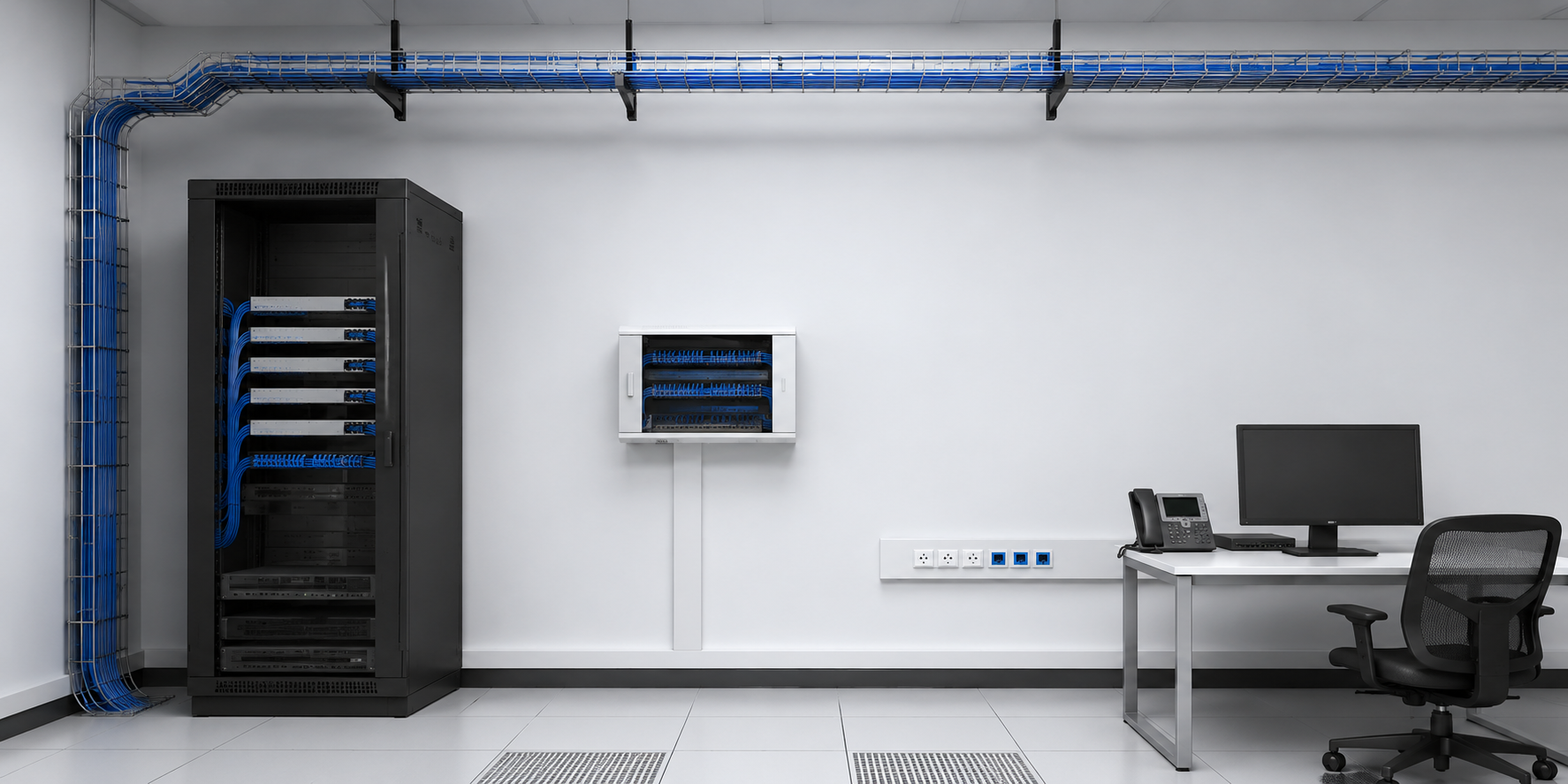
Network racks and cabinets house critical equipment including servers, patch panels, routers, and switches. These structures help maintain organized layouts while protecting devices from environmental factors.
Open-frame racks provide excellent airflow and are ideal for controlled environments, while enclosed cabinets offer additional security and dust protection.
Proper rack organization improves accessibility and simplifies maintenance tasks for IT teams.
Cable Management Systems (Trays and Conduits)
Cable management systems help organize network cabling throughout a facility. Common cable management solutions include:
- Cable trays
- Conduits
- Raceway systems
- Ladder racks
- Cable ties
Organized cable routing reduces clutter, improves airflow, and minimizes physical stress on cables. Effective cable management also makes troubleshooting and future upgrades easier.
Experienced structured cabling contractors emphasize proper cable management because it contributes significantly to network reliability and workplace safety.
Power Distribution Units (PDUs)
Power Distribution Units distribute electrical power to networking devices within server rooms and equipment racks.
Modern PDUs often include advanced features such as:
- Surge protection
- Remote monitoring
- Load balancing
- Environmental monitoring
Reliable power management reduces the risk of equipment failure and helps maintain uninterrupted network operations.
A dependable data cabling company can integrate both network infrastructure and power distribution systems to improve efficiency and reliability.
5. Advanced Devices for Modern Networks
Modern networking environments require advanced technologies that support wireless connectivity, cybersecurity, and intelligent communication systems.
Wireless Access Points (WAPs)
Wireless access points provide Wi-Fi connectivity throughout commercial facilities. Modern WAPs support advanced wireless standards such as Wi-Fi 6 and Wi-Fi 6E, enabling higher speeds and improved device capacity.
Structured cabling infrastructure connects wireless access points to switches and controllers, ensuring stable wireless performance across the building.
Proper placement and cabling of WAPs improve signal coverage and reduce connectivity issues.
Network Security Devices (Firewalls)
Cybersecurity remains a top priority for businesses operating in digitally connected environments. Firewalls protect networks from unauthorized access, malware, and cyberattacks.
Modern firewall systems provide capabilities such as:
- Threat detection
- Intrusion prevention
- VPN support
- Traffic filtering
- Application control
Integrating security devices into Structured Cabling Systems helps organizations create secure and compliant networking environments.
Businesses working with professional data cabling contractors can ensure that security infrastructure is properly integrated into the overall network design.
Media Converters and PoE Devices
Media converters allow communication between different network media types such as copper and fiber optic systems.
Power over Ethernet (PoE) technology enables both electrical power and data to travel through a single Ethernet cable. PoE devices commonly include:
- IP security cameras
- Wireless access points
- VoIP phones
- Access control systems
PoE reduces installation complexity and eliminates the need for additional electrical outlets near connected devices.
Advanced data cabling solutions frequently incorporate PoE technology to support smart building infrastructure and modern communication systems.
6. Choosing the Right Structured Cabling Devices
Selecting the appropriate structured cabling devices is essential for building a scalable and reliable network infrastructure.
Factors to Consider
Scalability
Businesses should choose infrastructure that can support future expansion. Scalable systems make it easier to add new devices, expand office spaces, and increase bandwidth capacity without replacing the entire network.
Performance
Network performance depends on cable quality, device compatibility, and installation standards. High-performance infrastructure improves communication speed and reduces latency.
Budget
Cost considerations are important, but businesses should focus on long-term value rather than short-term savings. Investing in quality infrastructure reduces maintenance costs and minimizes downtime.
Partnering with an experienced data cabling company helps organizations select solutions that balance budget requirements with operational needs.
Compatibility and Future-Proofing
Technology continues to evolve rapidly, making future-proofing an important consideration for businesses.
Modern Structured Cabling Systems should support:
- Cloud computing
- Smart office technology
- IoT devices
- AI-driven applications
- 5G connectivity
Future-ready infrastructure allows organizations to adapt to changing technologies without requiring major system overhauls.
Industry Standards and Certifications
Structured cabling installations should comply with recognized industry standards to ensure performance and safety.
Common standards include:
- ANSI/TIA standards
- ISO/IEC standards
- BICSI best practices
Certified structured cabling contractors follow these standards to deliver reliable and compliant installations.
Working with qualified professionals ensures businesses receive dependable network infrastructure that supports long-term operational success.
Conclusion
Structured cabling systems provide the organized infrastructure needed to support modern communication networks. Businesses depend on reliable cabling systems to maintain connectivity, improve operational efficiency, and support future technological growth.
Components such as patch panels, switches, fiber optic cables, wireless access points, and security devices all contribute to creating efficient and scalable network environments. Professionally designed data cabling solutions help businesses reduce downtime, improve network performance, and simplify maintenance.
As digital transformation continues across industries, organizations must invest in reliable and future-ready network infrastructure. Working with experienced data cabling contractors ensures that businesses receive high-quality installations tailored to their operational requirements.
CTA – BCS Consultants
Searching for a trusted data cabling company to improve your network infrastructure? BCS Consultants delivers professional data cabling services and customized structured cabling solutions designed to enhance connectivity, scalability, and operational performance.
Our experienced team provides reliable infrastructure solutions for businesses of all sizes while ensuring compliance with industry standards and future-ready performance. Contact us today!
FAQs
1. What are Structured Cabling Systems used for?
Structured Cabling Systems provide organized infrastructure for transmitting voice, data, video, and communication signals throughout a commercial or industrial facility.
2. Why are fiber optic cables important in modern networks?
Fiber optic cables support faster data transfer, longer transmission distances, higher bandwidth, and reduced interference compared to traditional copper cabling.
3. Why should businesses hire professional data cabling contractors?
Professional data cabling contractors ensure proper installation, compliance with industry standards, improved reliability, and easier future scalability.
4. How does Power over Ethernet (PoE) improve network installations?
PoE technology allows both electrical power and data to travel through a single Ethernet cable, reducing installation complexity and supporting devices such as IP cameras and wireless access points.
