Modern workplaces, especially open-plan offices, are increasingly facing challenges related to noise distractions. From casual conversations and ringing phones to HVAC systems and office equipment, unwanted sound can significantly impact employee focus, productivity, and overall well-being. This is where sound masking solutions play a crucial role in creating a more balanced and productive work environment.
Among the most commonly used sound masking approaches are pink noise and white noise. While both serve the purpose of reducing distractions, they differ in how they are perceived and how effectively they support workplace productivity. Understanding these differences can help organizations choose the right solution for their office environment.
Understanding Pink Noise vs White Noise in Office Environments
Definition of Pink Noise
Pink noise is a type of sound where lower frequencies are emphasized more than higher frequencies, resulting in a deeper, smoother, and more natural sound. It closely resembles sounds found in nature, such as steady rainfall, ocean waves, or rustling leaves. Because of its balanced and less harsh profile, pink noise sound masking is often preferred for long-duration listening in office environments.
Definition of White Noise
White noise, on the other hand, contains equal intensity across all frequencies within the audible spectrum. This creates a consistent "hissing" or static-like sound. A white noise machine for office environments is commonly used to mask disruptive sounds by creating a uniform audio blanket that reduces the impact of sudden noises.
Key Differences in Frequency and Perception
The primary distinction between pink noise and white noise lies in their frequency distribution. White noise spreads energy evenly across frequencies, which can sometimes feel sharp or intense to listeners over long periods. Pink noise reduces higher frequencies, making it sound softer and more comfortable. As a result, pink noise is generally better suited for sustained focus, while white noise is often more effective at masking abrupt and high-frequency disturbances.
What Is Sound Masking and Why It Matters in Workplaces
Sound masking is a technique that involves adding a subtle, engineered background sound to an environment to reduce the intelligibility of speech and minimize distractions. Unlike noise cancellation, which attempts to eliminate sound entirely, sound masking solutions work by blending sounds into the environment so that they become less noticeable and less disruptive.
How Sound Masking Works
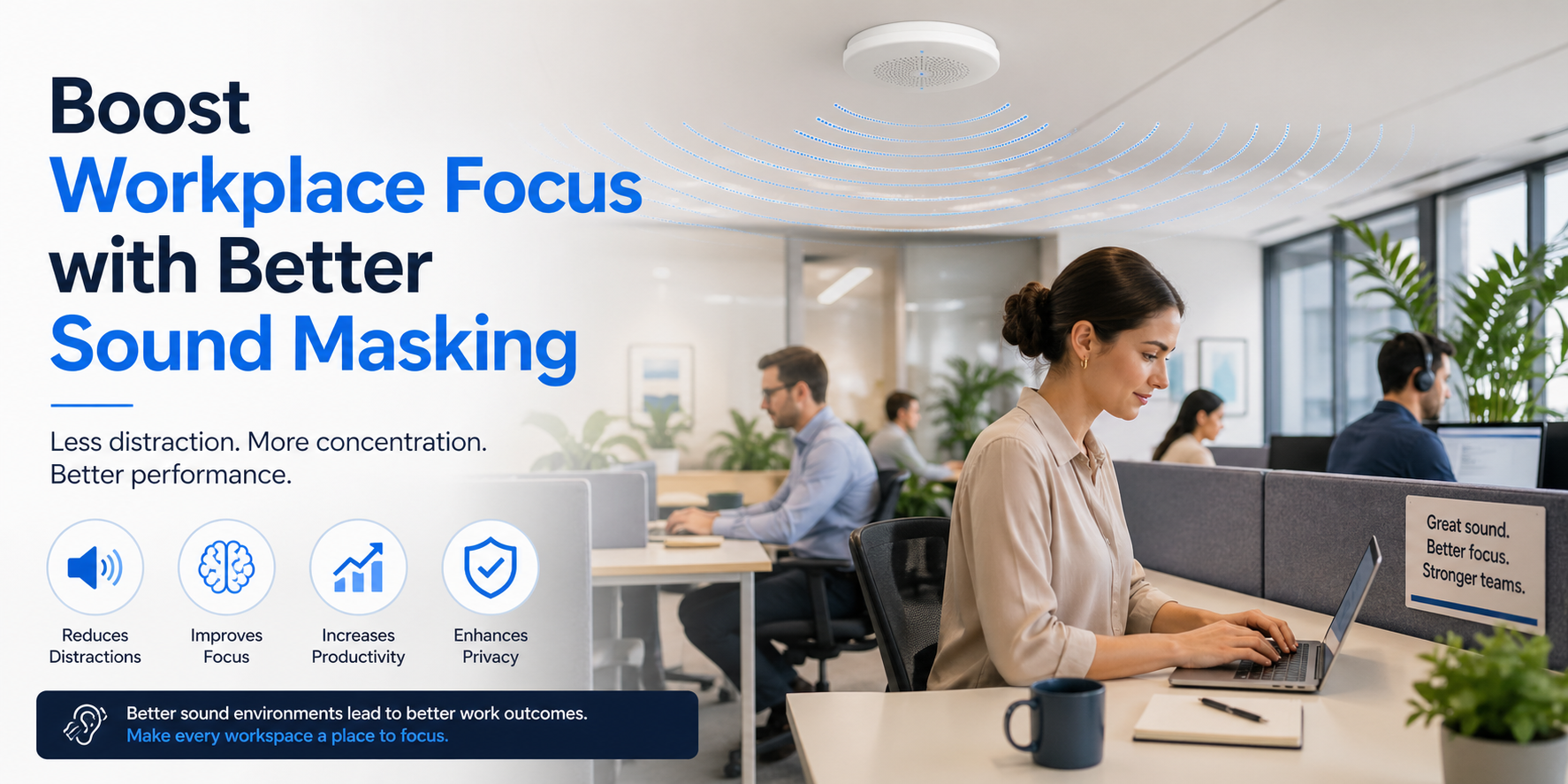
Sound masking systems distribute ambient sound, typically pink or white noise, through strategically placed speakers in ceilings or workspaces. This added sound reduces the distance over which conversations can be understood, effectively improving privacy and reducing distractions without creating silence.
Importance for Open Offices and Productivity
Open office layouts are designed to encourage collaboration, but they often come at the cost of increased noise levels. A well-designed white noise system for office environments helps maintain an optimal acoustic balance, allowing employees to concentrate without being constantly interrupted by surrounding conversations.
Common Workplace Noise Challenges
- Frequent interruptions from conversations
- Noise from phone calls and virtual meetings
- Background noise from office equipment
- Lack of speech privacy in shared spaces
Implementing effective white noise for office privacy or pink noise-based solutions can significantly mitigate these challenges.
Pink Noise vs White Noise: Which Is Better for Focus and Productivity?
Impact on Concentration and Cognitive Performance
White noise is particularly effective at masking sudden and unpredictable sounds, making it useful in high-traffic or dynamic office environments. However, pink noise is often better suited for maintaining long-term concentration due to its softer and more natural sound profile, which is less likely to cause listener fatigue.
Employee Comfort and Listening Experience
Employee comfort is a key factor when implementing any sound masking strategy. While a white noise generator for office use can provide strong masking capabilities, prolonged exposure may feel tiring for some individuals. In contrast, pink noise tends to be perceived as more pleasant and less intrusive, making it ideal for continuous use throughout the workday.
Use Cases for Each Noise Type
- White Noise: Ideal for busy offices, call centers, and environments with unpredictable or high-frequency noise
- Pink Noise: Best suited for quiet zones, creative spaces, and offices requiring prolonged focus
Many modern sound masking solutions combine both approaches to deliver optimal performance across different areas of the workplace.
Benefits of Using Sound Masking in Office Spaces
Improved Speech Privacy
One of the most significant benefits of sound masking is enhanced speech privacy. By reducing how far conversations travel, it becomes more difficult for unintended listeners to understand discussions, which is especially important in confidential work environments.
Reduced Distractions
Sound masking minimizes the impact of sudden noises and background chatter, helping employees stay focused on their tasks. This leads to fewer interruptions and improved overall productivity.
Enhanced Employee Well-being
A well-balanced acoustic environment contributes to lower stress levels and reduced cognitive fatigue. Compared to noise cancellation machines for office use, sound masking provides a more natural and comfortable auditory experience that supports long-term well-being.
How to Choose the Right Sound Masking Solution for Your Office
Factors to Consider
Selecting the right solution depends on several key factors:
- Office layout and spatial design
- Existing noise levels and acoustic challenges
- Nature of work and employee tasks
- Employee preferences and comfort levels
Integration with Existing AV/IT Systems
Modern sound masking solutions are designed to integrate seamlessly with existing AV and IT infrastructure. This allows organizations to control and customize sound levels across different zones, ensuring optimal performance without disrupting current systems.
Tips for Implementation
- Conduct a professional acoustic assessment to identify problem areas
- Choose scalable and flexible systems that can grow with your office
- Carefully balance sound levels to avoid over-masking
- Test both pink and white noise options before final deployment
Ready to Improve Your Workplace Acoustics?
If you're looking to implement effective sound masking solutions tailored to your office environment, BCS Consultants can help. With deep expertise in workplace acoustics, AV integration, and intelligent system design, their team delivers customized solutions that enhance focus, privacy, and employee well-being.
Whether you need a white noise system for office use, advanced pink noise sound masking, or fully integrated acoustic strategies, BCS Consultants will guide you from assessment to implementation.
👉 Contact BCS Consultants today to discover how the right sound masking approach can transform your workspace into a more productive and comfortable environment.
Frequently Asked Questions (FAQs)
1. What is the best sound masking solution for open offices?
The best sound masking solutions for open offices are those that are specifically designed based on the layout, occupancy, and noise profile of the workspace. Typically, these systems use a blend of pink noise and white noise to create a consistent ambient sound that reduces distractions without being intrusive. Advanced solutions also allow zoning, enabling different sound levels in collaboration zones versus focus areas. A professional acoustic assessment ensures optimal implementation.
2. Is a white noise machine for office use effective for privacy?
Yes, a white noise machine for office use is highly effective in improving speech privacy. By introducing a consistent background sound, it reduces the intelligibility of conversations beyond a short range. This makes it harder for others to overhear sensitive discussions, improving confidentiality while maintaining a comfortable acoustic environment.
3. What is the difference between sound masking and noise cancellation machines for office use?
Sound masking and noise cancellation machines for office use serve fundamentally different purposes. Noise cancellation eliminates sound waves and is typically used in personal devices like headphones. Sound masking, however, adds ambient sound to reduce the clarity of unwanted noise. This makes it a far more practical and scalable solution for office-wide applications.
4. Can a white noise system for office be integrated with existing infrastructure?
Yes, modern white noise systems for office environments are designed for seamless integration with existing AV and IT systems. Whether installed through ceiling speakers or standalone devices, these systems can be centrally managed and customized. A white noise generator for office can be scaled across different zones, ensuring flexibility and long-term usability without major infrastructure changes.