
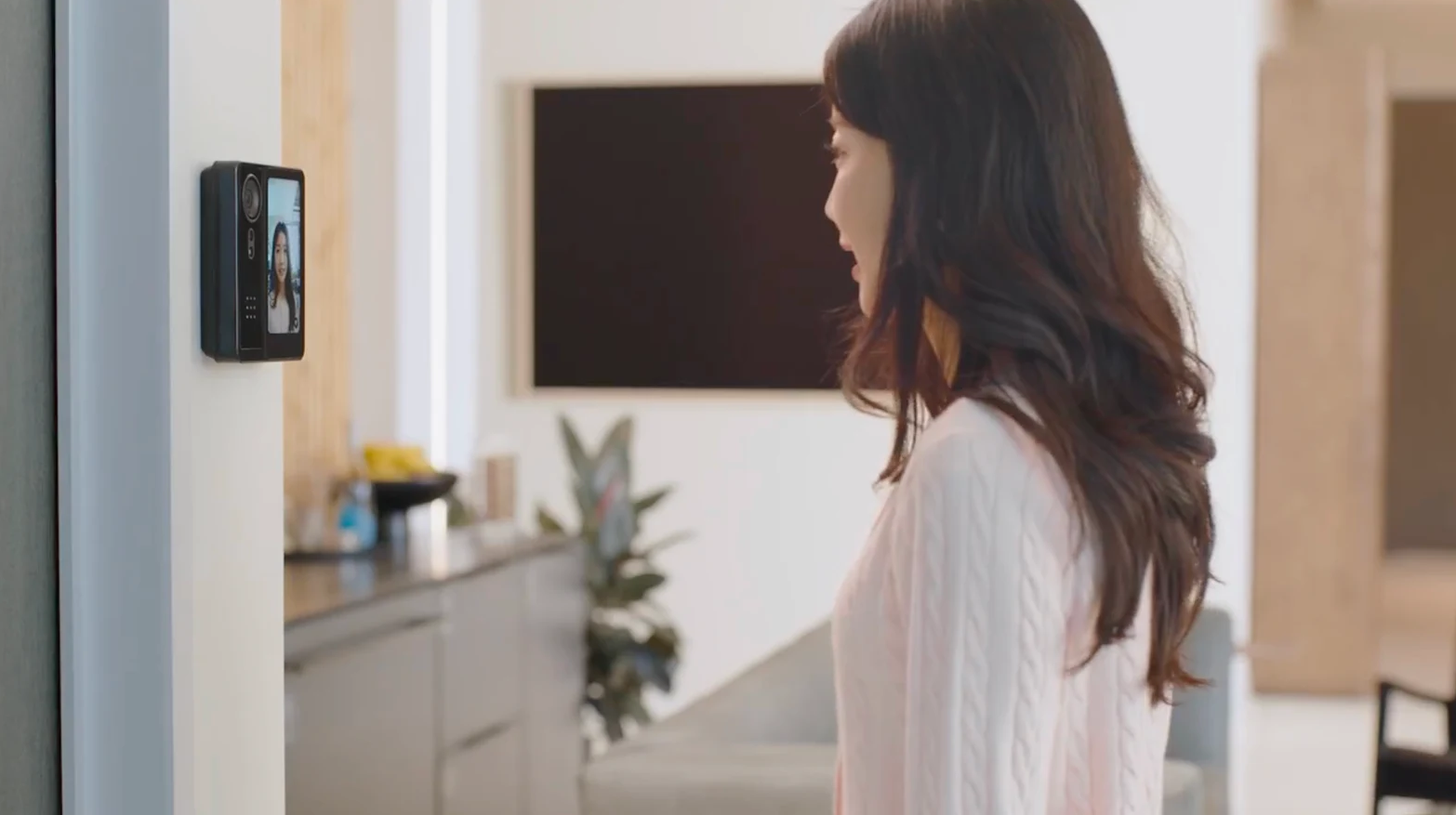
Access control has evolved significantly over the past decade. Traditional keys have given way to keycards, mobile credentials, and cloud-managed access systems. Today, organizations are taking the next step with biometric authentication, enabling faster, more secure, and more convenient access to their facilities.
However, implementing facial recognition in enterprise environments is far more complex than unlocking a smartphone. Unlike consumer devices, access control readers must perform reliably outdoors, in changing lighting conditions, and under constant daily use, all while protecting against spoofing attempts.
That's exactly what Verkada set out to solve with the Verkada AF64 Access Station Pro, bringing enterprise-grade facial recognition to modern access control.
Why Traditional Access Methods Create Challenges
Many organizations still rely on physical credentials to secure their facilities. While familiar, these methods introduce unnecessary operational challenges.
Lost or shared access cards can create security risks, while replacing badges and managing permissions requires ongoing administrative effort. Employees may also experience delays at entry points when credentials are forgotten or misplaced.
As organizations grow, these small inefficiencies can quickly become larger operational issues, driving the need for a more secure and convenient approach to access management.
The Rise of Biometric Access Control
Facial recognition removes many of the limitations associated with physical credentials.
Instead of presenting a badge or key, authorized users simply approach the reader, allowing access to be verified and granted in seconds. This creates a smoother experience for employees while strengthening security through identity-based authentication rather than possession of a physical credential.
For organizations, the benefits include faster entry, reduced credential management, and improved protection against unauthorized access.
Preventing Spoofing with Advanced Liveness Detection
One of the biggest concerns surrounding facial recognition is whether someone could fool the system using a photograph or video.
Enterprise-grade biometric readers are designed specifically to prevent this.
Rather than relying solely on a standard camera, the Verkada AF64 combines high-resolution imaging with infrared depth sensing to verify that a real person is standing in front of the reader. This process, known as liveness detection, helps distinguish live users from photographs, screens, or other spoofing attempts.
The result is a higher level of confidence that only authorized individuals gain access.
Built for Real-World Conditions
Unlike smartphones, access control readers cannot rely on controlled lighting or ideal positioning.
They must operate reliably in direct sunlight, rain, changing weather conditions, and high-traffic environments where users approach from different angles and distances.
To maintain accuracy, the AF64 combines RGB imaging with infrared depth sensing, allowing it to continue identifying authorized users even in challenging conditions. This makes it well suited for building entrances, campuses, healthcare facilities, and other environments where reliability is essential.
Faster Authentication Without Compromising Security
For access control, speed matters just as much as security.
Employees expect doors to unlock instantly without delays, while organizations need assurance that every authentication is accurate.
By processing facial recognition and depth information together, the AF64 delivers sub-second authentication while maintaining a high level of identity verification. This provides a seamless user experience without sacrificing security.
Why Cloud-Managed Access Matters
Modern access control extends beyond the door reader itself.
Cloud-managed platforms allow security teams to manage users, permissions, and devices from a centralized interface, regardless of location. This simplifies administration while providing greater visibility into who accessed specific areas and when.
Instead of manually managing credentials across multiple buildings, organizations can make updates remotely, respond faster to security events, and maintain consistent policies across every site.
Is Facial Recognition Right for Your Organization?
Biometric authentication is becoming increasingly valuable for organizations that want to strengthen security while improving the user experience.
Industries such as corporate offices, healthcare, education, government, and critical infrastructure can all benefit from replacing traditional credentials with identity-based access that is faster, more secure, and easier to manage.
How BCS Consultants Can Help
Choosing the right access control solution involves more than selecting the latest technology. A successful deployment requires thoughtful planning, proper system integration, and a solution tailored to your facility's operational needs.
At BCS Consultants, we help organizations design and deploy integrated access control systems powered by leading technologies like Verkada. From biometric authentication and cloud-managed access control to video surveillance and visitor management, we deliver solutions that improve security while simplifying day-to-day operations.
The future of access control goes beyond replacing keys with cards. It is about verifying identity quickly, securely, and intelligently.
Solutions like the Verkada AF64 Access Station Pro combine facial recognition, advanced liveness detection, and cloud-managed administration to deliver a modern approach to facility security.
As organizations continue investing in smarter buildings and stronger physical security, biometric access control offers a practical way to improve convenience, reduce administrative overhead, and better protect people and property.