Walk into almost any meeting room today and you'll find sophisticated technology, video conferencing systems, wireless presentation tools, intelligent cameras, digital audio processing, and room scheduling platforms. Yet despite these advancements, one challenge continues to frustrate users:
The room is too complicated to use.
When presenters spend the first five minutes of a meeting searching for the right button or navigating unfamiliar touch screen menus, technology becomes a barrier instead of an enabler.
At BCS Consultants, we've found that the most successful meeting spaces aren't necessarily the ones with the most technology, they're the ones where technology feels effortless.
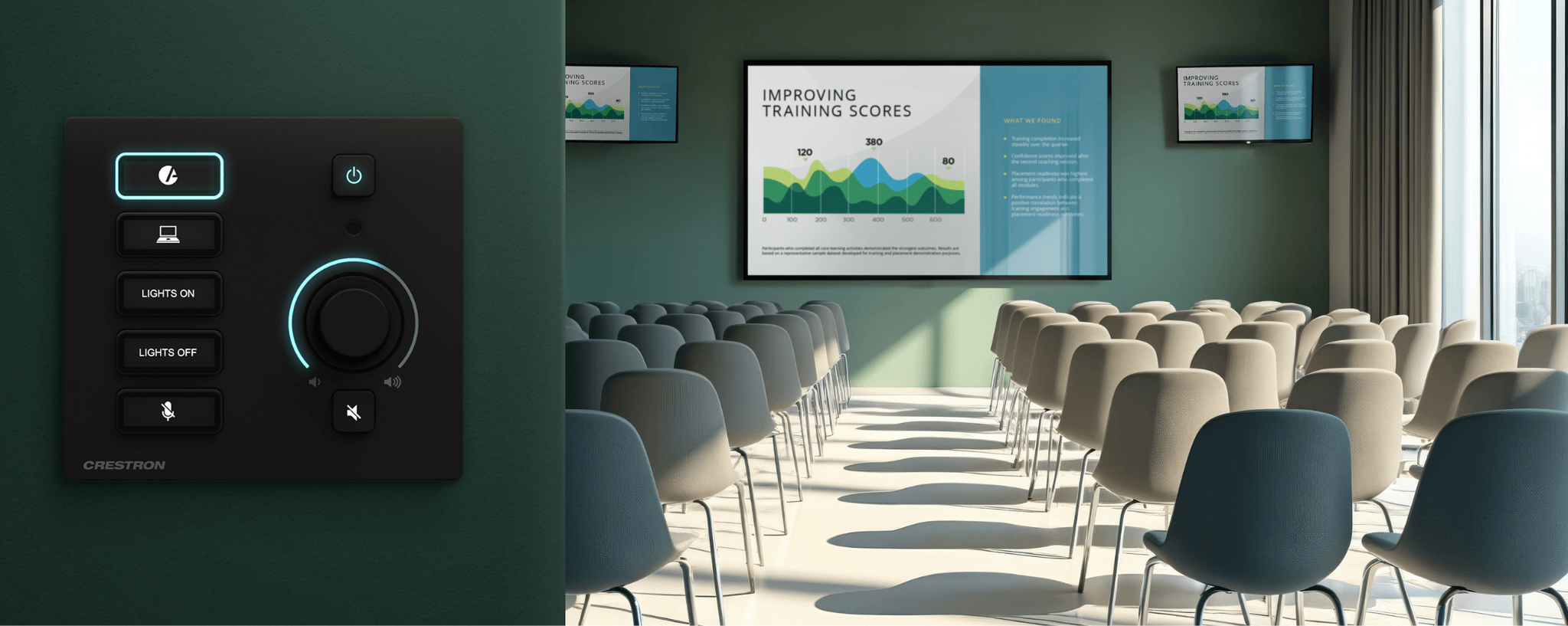
That's why solutions like the Crestron MPC4 and Crestron MPB4 wall-mounted controllers are becoming increasingly valuable. They remind us of an important principle in workplace technology: the best user experience is often the simplest one.
The Hidden Cost of Overcomplicated Meeting Rooms
Organizations invest heavily in collaboration technology, but many overlook one critical factor, usability.
We've all seen it happen.
A presenter walks into a room and immediately begins looking for the right control. The projector won't turn on. The volume control is buried three menus deep. Someone calls IT before the meeting has even started.
These seemingly small frustrations create larger business problems:
- Meetings start late.
- Employees avoid using available technology.
- IT teams receive unnecessary support requests.
- Expensive AV systems become under-utilized.
The issue usually isn't the technology itself. It's how people interact with it.
Why Physical Controls Still Have a Place
Touch screens have transformed workplace technology, but they aren't always the fastest solution.
There are moments when a presenter simply wants to:
- adjust the room volume
- mute the audio
- switch an input
- power the display on or off
These actions shouldn't require navigating multiple menus or looking away from an audience.
Physical buttons and rotary controls provide immediate feedback and can often be operated without even looking at the interface. In classrooms, lecture halls, and executive boardrooms, that simplicity helps presenters stay focused on their audience rather than the technology.
Sometimes the most modern solution isn't replacing every button with a touch screen, it's giving users the right control for the task.
Designed for Real-World Collaboration
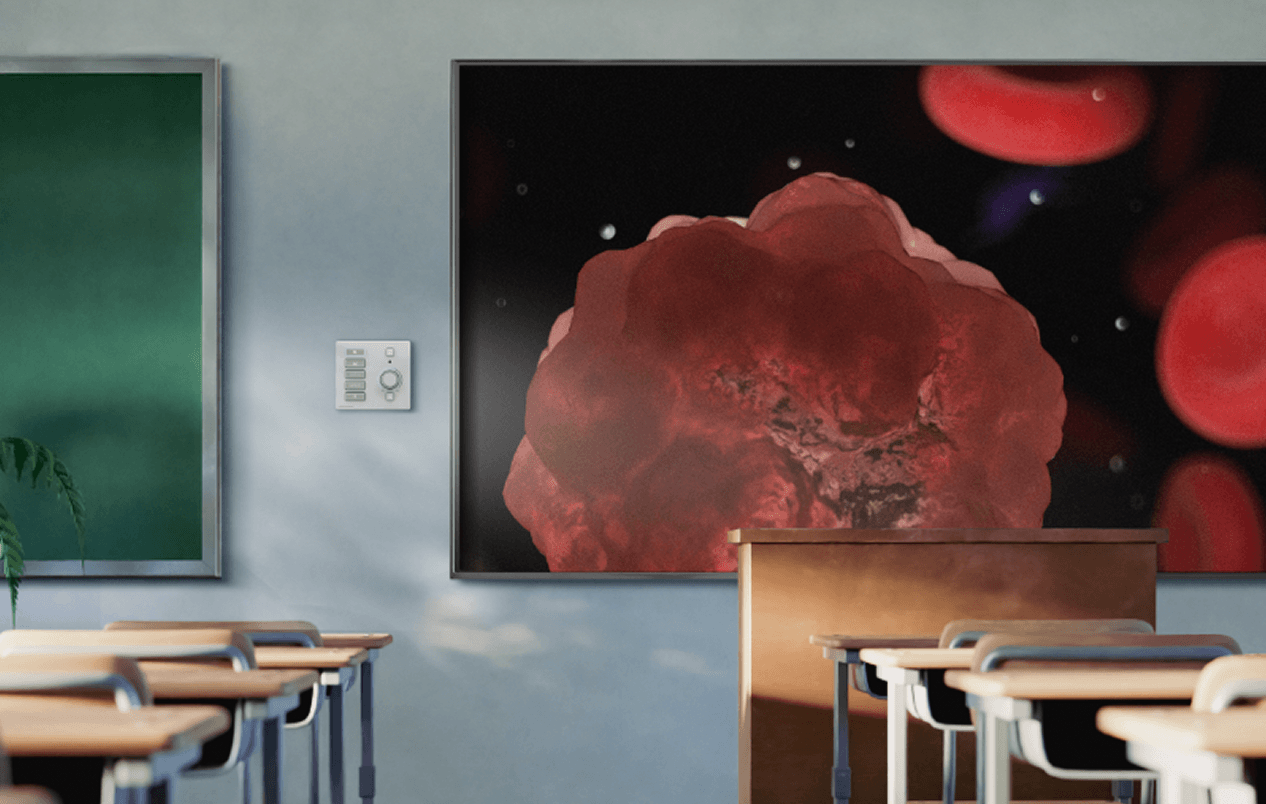
The Crestron MPC4 and MPB4 controllers are designed around a simple idea: make room technology intuitive.
Rather than overwhelming users with dozens of options, these interfaces focus on the controls people use most often.
Common functions such as power, volume, mute, and source selection are immediately accessible, creating a consistent experience across every room.
For organizations standardizing meeting spaces, this consistency delivers significant value. Employees no longer need to relearn room controls every time they enter a different space, reducing hesitation and improving confidence.
Simplicity Benefits More Than End Users
Ease of use doesn't just improve meetings, it also simplifies operations for IT and facilities teams.
Many organizations manage dozens or even hundreds of collaboration spaces across multiple offices.
Standardized room controls help reduce complexity by providing:
- consistent room operation
- easier user adoption
- fewer help desk requests
- simplified device management
Solutions that support centralized management platforms also allow IT teams to remotely provision, monitor, and update devices without unnecessary site visits, improving efficiency across the organization.
Built for Modern Workplaces
Today's collaboration spaces require more than reliable hardware. They also need to integrate seamlessly into enterprise environments.
Modern room controllers support features such as:
- Power over Ethernet (PoE) for simplified installation
- remote provisioning and monitoring
- enterprise-grade network security
- flexible deployment across classrooms, conference rooms, and training spaces
These capabilities help organizations standardize technology while reducing installation complexity and long-term maintenance costs.
Technology Should Support the Conversation, Not Interrupt It
One of the biggest misconceptions in workplace technology is that adding more features automatically creates a better experience.
In reality, users value technology that disappears into the background.
The most successful meeting rooms are those where participants never think about how to start the meeting, adjust the volume, or control the room. They simply walk in and begin collaborating.
That's the real value of intuitive room controls.
You must be logged in to post a comment.