In today’s workplaces, noise is no longer just an annoyance; it’s a risk. As offices become more open, healthcare environments become more collaborative, and enterprise spaces more dynamic, conversations travel farther than intended. That’s where sound masking has shifted from a “nice-to-have” to a business-critical solution.
Sound masking isn’t about making spaces louder. It’s about making them smarter, protecting privacy, improving focus, and creating environments where people can work comfortably and confidently.
The Problem with Modern Workspaces
Open offices, glass walls, shared clinical spaces, and hybrid collaboration zones were designed to increase transparency and teamwork. But they often introduce unintended consequences:
- Confidential conversations are easily overheard
- Employees struggle to focus due to background speech
- Compliance risks increase in regulated environments
- Overall workplace satisfaction declines
In healthcare and enterprise settings especially, speech privacy isn’t optional, it’s a requirement.
What Sound Masking Actually Does
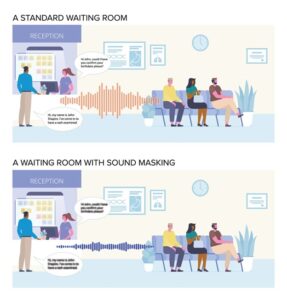
Sound masking works by emitting a low-level, ambient background sound, tuned specifically to human speech frequencies. This reduces how far conversations can be understood without increasing distraction.
The result:
- Speech becomes unintelligible beyond a short distance
- Privacy is restored without physical barriers
- Spaces feel calmer and more consistent acoustically
Unlike white noise, professionally designed sound masking systems are engineered, measured, and optimized for the space.
Why Privacy Drives Productivity
Research consistently shows that speech is the number-one distraction in offices. When employees can overhear conversations, even unintentionally, their cognitive load increases and focus drops.
With effective sound masking:
- Employees regain concentration
- Stress levels decrease
- Productivity and accuracy improve
- Collaboration still happens, without oversharing
Privacy and productivity aren’t competing goals. Sound masking supports both.
Use Cases That Demand Sound Masking

Open Offices
Reduce distractions while maintaining openness and collaboration.
Healthcare Environments
Support HIPAA compliance, protect patient conversations, and create calmer care settings.
Enterprise & Corporate Spaces
Safeguard HR discussions, executive meetings, and sensitive business conversations.
Financial & Legal Firms
Ensure confidentiality without expensive construction or redesigns.
Why Technology and Design Matter
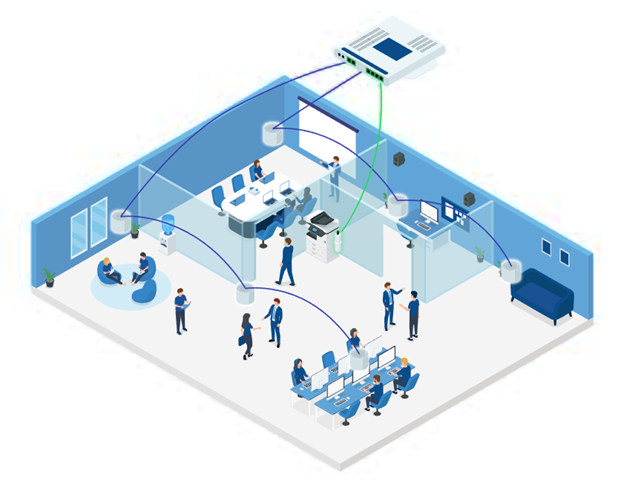
Not all sound masking systems are created equal. Effective solutions integrate seamlessly into ceiling infrastructure, scale across environments, and allow precise tuning and control.
Solutions from Biamp are designed with these real-world needs in mind, combining acoustic science, intelligent control, and enterprise-grade reliability. When deployed correctly, sound masking becomes invisible to users but invaluable to the organization.
Real-World Impact: From Noise to Confidence
One client described their experience simply: “Privacy achieved.”
That outcome reflects more than reduced noise, it reflects confidence. Confidence that conversations stay where they belong. Confidence that employees can focus. Confidence that the environment supports the work being done.
Sound Masking as a Strategic Investment
As organizations rethink how spaces support people, thinking beyond furniture and floorplans is essential. Sound is part of the experience, and managing it effectively is now a strategic decision, not a technical afterthought.
Sound masking isn’t about adding noise.
It’s about restoring balance.
Ready to design spaces that protect privacy and enhance productivity?
Discover how intelligent sound masking can transform your environment.

You must be logged in to post a comment.