Efficiency is a defining factor in how successfully an organization operates and scales. As companies expand, the need for structured coordination becomes critical, especially when it comes to shared resources like meeting rooms. Poor management of these spaces can lead to delays, confusion, and reduced productivity across teams. This is where conference room automation becomes an essential component of modern office infrastructure.
A meeting room booking system goes far beyond basic scheduling. It introduces intelligence, visibility, and automation into workplace operations. By combining technology with smart processes, organizations can transform how meeting spaces are utilized, ultimately improving collaboration, efficiency, and employee satisfaction.
Common Challenges in Managing Meeting Rooms
Without a structured system in place, managing meeting rooms can quickly become chaotic. Many organizations still rely on manual processes or fragmented tools, which create multiple inefficiencies.
Double bookings and scheduling conflicts
One of the most frequent issues is overlapping bookings. When multiple employees or teams reserve the same room without a centralized system, it leads to confusion and wasted time. Meetings may get delayed or canceled, affecting productivity, and sometimes even client relationships.
Wasted time searching for available rooms
Employees often spend several minutes, sometimes even longer, trying to locate an available room. This might involve checking different calendars, messaging colleagues, or physically walking around the office. Over time, this lost productivity adds significantly.
Underutilized or overcrowded meeting spaces
Some meeting rooms remain unused for long periods, while others are consistently overcrowded. Without accurate usage data, organizations cannot effectively balance demand and availability. This results in inefficient space management and unnecessary real estate costs.
Lack of visibility across teams and departments
In large organizations, different departments may use separate systems or processes for booking rooms. This lack of transparency makes it difficult to coordinate meetings across teams, leading to communication gaps and missed opportunities for collaboration.
What Is a Meeting Room Booking System?
A meeting room booking system is a centralized digital platform that simplifies the process of reserving and managing meeting spaces. It is a key element of meeting room automation, enabling organizations to streamline operations and reduce manual intervention.
Definition and how it works
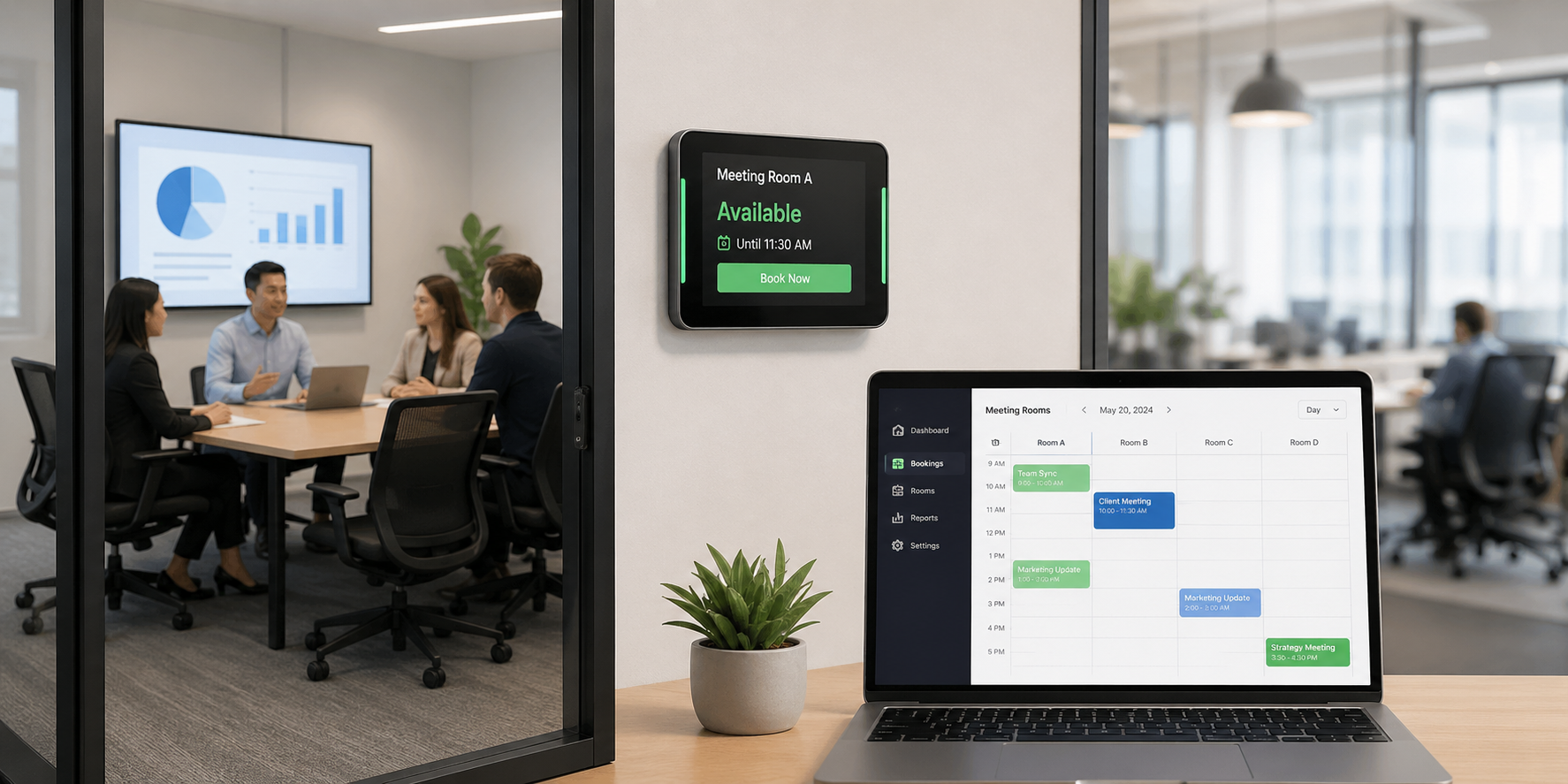
The system integrates with existing workplace tools such as calendars and communication platforms. Employees can view real-time availability of meeting rooms, book spaces instantly, and receive confirmations or reminders. Many systems also allow users to modify or cancel bookings easily.
Advanced solutions extend beyond scheduling by integrating with hardware components, forming a complete conference room control system. This allows users to control lighting, displays, and audio settings directly from the booking interface.
Key features
Modern conference room solutions offer a wide range of features, including:
- Real-time room availability updates
- Integration with Outlook, Google Calendar, and other scheduling tools
- Automated booking confirmations and reminders
- Interactive room displays showing booking status
- Analytics dashboards for tracking usage patterns
- Integration with conference room audio solutions and video conferencing systems
Types: cloud-based vs on-premise solutions
- Cloud-based solutions are highly flexible, allowing access from anywhere. They are easier to deploy, require minimal IT infrastructure, and are ideal for organizations with hybrid work models.
- On-premise solutions offer greater control over data and customization but require higher investment and ongoing maintenance.
Both types support automated conference room environments, depending on the organization’s scale and requirements.
Key Benefits of Using a Meeting Room Booking System
Implementing a meeting room booking system brings both immediate and long-term benefits that directly impact business performance.
Eliminates scheduling conflicts and confusion
A centralized system ensures that all bookings are visible and updated in real time. This eliminates double bookings and reduces the chances of last-minute disruptions.
Improves workplace productivity and efficiency
Employees no longer waste time searching for meeting spaces or resolving conflicts. Quick and easy booking allows them to focus on their core tasks, leading to better time management and higher productivity.
Enhances employee experience
A smooth booking process contributes to positive workplace experience. Employees can easily find suitable spaces equipped with the right technology, including integrated conference room for audio solutions, ensuring meetings run without technical issues.
Enables better space utilization with data insights
Analytics provide valuable insights into room usage patterns. Organizations can identify which rooms are frequently used, which are underutilized, and how to optimize layouts for maximum efficiency.
How Booking Systems Improve Workplace Collaboration
Collaboration is at the heart of innovation, and meeting room booking systems play a crucial role in enabling seamless teamwork.
Easy scheduling across teams and locations
With a centralized system, employees can book meeting rooms across different floors, buildings, or even cities. This simplifies coordination and reduces communication barriers.
Integration with tools like calendars and communication platforms
Modern systems integrate seamlessly with tools such as Microsoft Teams, Zoom, and Slack. This ensures that meetings are not only scheduled but also connected to virtual collaboration platforms, making communication more effective.
Supports hybrid and remote work environments
Hybrid work models require flexible solutions. An automated conference room setup ensures that both in-office and remote participants can join meetings effortlessly. Features like video conferencing integration, screen sharing, and smart controls create a unified experience.
Cost Savings and Operational Efficiency
A meeting room booking system is not just about convenience. It also delivers measurable cost savings and operational improvements.
Reduces wasted space and resources
By analyzing usage data, organizations can optimize their office layout. Underutilized rooms can be repurposed, and overcrowded spaces can be expanded or redesigned.
Minimizes administrative workload
Manual booking processes often require administrative oversight. Automation eliminates this need, reducing workload and allowing staff to focus on more strategic responsibilities.
Data-driven decision-making for office planning
Detailed reports provide insights into how spaces are used over time. This helps organizations make informed decisions about expansion, downsizing, or redesigning office spaces.
Key Features to Look for in a Meeting Room Booking System
Choosing the right system is essential to maximize efficiency and ensure long-term success.
User-friendly interface
An intuitive interface ensures that employees can adopt the system quickly without extensive training.
Mobile accessibility
Mobile access allows employees to book rooms anytime and from anywhere, supporting flexibility and remote work.
Integration with existing tools
Seamless integration with calendars, communication platforms, and conference room control systems ensures smooth operations without disrupting existing workflows.
Reporting and analytics capabilities
Advanced analytics help organizations track usage trends, identify inefficiencies, and optimize resource allocation.
Solutions that combine conference room automation, meeting room automation, and integrated conference room audio solutions provide a comprehensive and future-ready approach to workplace management.
Conclusion: Transform Your Office with Smart Room Booking
Efficient office management requires a strategic approach to managing shared resources. A meeting room booking system eliminates common challenges, improves productivity, and enhances collaboration across teams.
By adopting conference room automation, organizations can create workplaces that are smarter, more efficient, and better equipped to handle modern work dynamics. From reducing scheduling conflicts to enabling data-driven decision-making, the advantages are substantial.
Investing in advanced conference room solutions is not just about convenience. It is about building a workplace that supports growth, innovation, and employee satisfaction.
Upgrade Your Meeting Spaces with BCS Consultants
Looking to streamline your office operations with advanced conference room automation?
BCS Consultants specializes in delivering tailored conference room solutions, including intelligent conference room control systems and high-performance conference room audio solutions.
Transform your meeting spaces into smart, efficient environments that boost productivity and collaboration. Contact BCS Consultants today and take the next step toward a future-ready workplace.
FAQs
1. What is conference room automation and why is it important?
Conference room automation involves integrating technology to manage scheduling, audio, video, and environmental controls in meeting spaces. It is important because it improves efficiency, reduces manual effort, and enhances the overall meeting experience.
2. How does a meeting room booking system help in hybrid workplaces?
It allows employees to schedule meetings seamlessly across physical and virtual environments. Integration with video conferencing tools ensures smooth collaboration between in-office and remote participants.
3. What features should I prioritize in conference room solutions?
Key features include real-time availability, calendar integration, mobile access, analytics, and compatibility with conference room control systems and conference room audio solutions.
4. Can small businesses benefit from meeting room automation?
Yes, even small businesses can benefit by improving space utilization, reducing scheduling conflicts, and enhancing overall efficiency with minimal investment.