
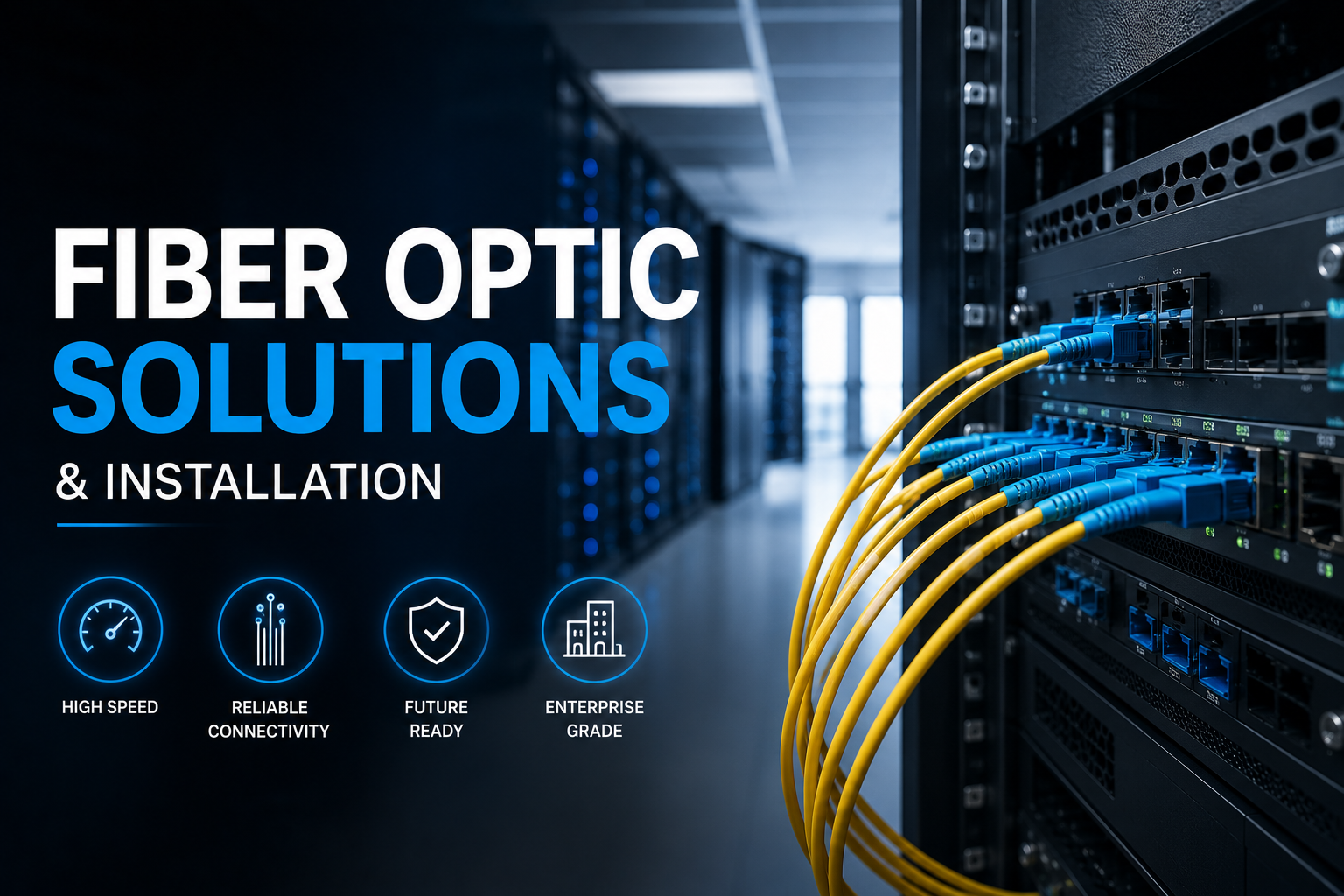
Fiber Optic Solutions for Enterprise Networks
Fiber optic solutions form the high-speed backbone of every serious enterprise network. Where copper cabling carries data across short runs at gigabit speeds, fiber moves enormous bandwidth across long distances with virtually no signal degradation. For data centers, campus backbones, and high-bandwidth applications, fiber is not a luxury — it is the foundation. This hub page introduces the core concepts behind fiber optic solutions, the difference between single-mode and multi-mode fiber, and the speed standards reshaping enterprise demand. BCS Consultants designs and installs fiber backbones with RCDD-certified engineers — the industry's most rigorous credential for structured cabling design.
What Are Fiber Optic Solutions?
Fiber optic cabling transmits data as pulses of light through glass strands, achieving bandwidth and distance far beyond what copper cabling can deliver. Fiber is immune to electromagnetic interference, ideal for long runs between buildings or floors, and the technology of choice for any backbone connection where reliability and speed matter most.
Fiber optic solutions cover the full stack: the cabling itself, the connectors and patch panels, the transceivers in the switches, and the design and testing that make sure the whole system performs to specification.
Single-Mode vs. Multi-Mode Fiber
Single-mode fiber uses a thin glass core that carries a single ray of light, allowing transmission across very long distances — kilometers between buildings or across a campus. It is the right choice for long-haul, high-bandwidth backbones.
Multi-mode fiber uses a larger core that allows multiple light paths, supporting shorter runs at lower transceiver cost. It is the typical choice within data centers and inside individual buildings where distances are measured in meters rather than kilometers.
The right choice depends on distance, bandwidth requirements, and total cost over the life of the deployment. For new builds, many organizations install single-mode for backbones and multi-mode for shorter runs, balancing performance with budget.
Fiber Optic in Enterprise Networks
Enterprise fiber deployments cover campus backbones connecting multiple buildings, vertical backbones running between floors of a single building, data center interconnects supporting high-density compute and storage, and high-bandwidth horizontal runs to specialized workstations and equipment. As applications demand more bandwidth and lower latency, the share of enterprise traffic riding on fiber continues to grow.
Modern Fiber Speed Standards Driving Enterprise Demand
Today's high-end enterprise networks routinely deploy 100-gigabit fiber backbones, and 400-gigabit and 800-gigabit speeds are moving from data center cores into enterprise edge environments. These standards are not just numbers — they shape the cabling decisions an organization makes now. Installing fiber that can support the next generation of transceivers protects the investment for years.
You must be logged in to post a comment.