
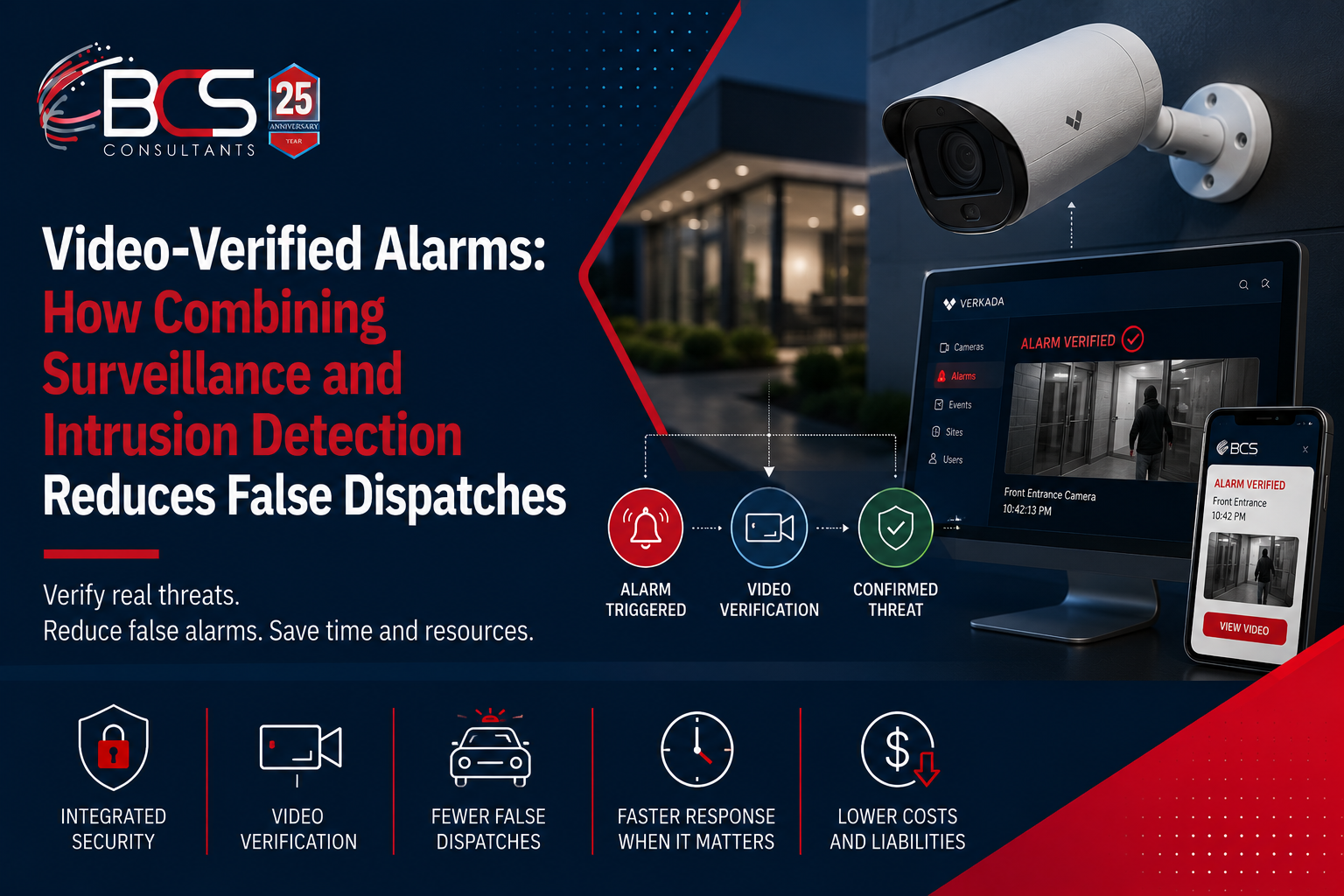
Commercial alarm systems generate a significant volume of false alarms — events that trigger a monitoring center response and sometimes an emergency services dispatch that turn out, on investigation, to be caused by equipment malfunction, environmental factors, user error, or animals rather than actual intrusions. This is not a minor operational inconvenience. It wastes emergency services resources, can result in fines in jurisdictions that charge for repeated false alarm responses, and erodes confidence in the alarm system among the staff responsible for responding to notifications.
Video-verified alarms address this problem at the root. By combining intrusion detection with surveillance cameras, these systems allow monitoring center operators — or automated AI systems — to confirm whether an alarm event represents a genuine threat before dispatching emergency services. The result is dramatically higher alarm reliability and a more effective security response.
How Traditional Alarm Monitoring Works
In a traditional commercial alarm system, when a sensor triggers — a motion detector, door contact, or glass break detector — the control panel communicates an alarm signal to the central monitoring station. The monitoring station operator follows a response protocol: they attempt to contact the business's key holders, and if they cannot confirm it is a false alarm within a defined time window, they dispatch law enforcement.
The monitoring station operator has no way to evaluate whether the alarm represents an actual intruder, a spider crawling across a motion detector lens, an employee who forgot to disarm the system, or an environmental condition triggering a false detection. The dispatch decision is made without any contextual information about the nature of the event.
This is why the false alarm rate for traditional commercial alarm systems is very high. Most alarm activations are not caused by intruders, but the response protocol cannot distinguish between a real intrusion and a false trigger without additional information.
How Video-Verified Alarms Work
Video-verified alarm systems link surveillance cameras to the alarm system so that when an alarm event occurs, camera footage from the relevant area is automatically made available to the monitoring center operator at the time of the alarm.
When the motion detector triggers, the monitoring center operator does not just receive an alarm zone number — they receive a live video feed or a short pre-alarm clip from the camera covering that zone. They can see whether there is a person in the space, whether the person appears to be an intruder or an employee who forgot to disarm the system, or whether there is no visible cause for the alarm.
With this visual context, the operator can make an informed dispatch decision rather than a protocol-driven one. Confirmed intrusions receive immediate law enforcement dispatch. Events where the camera shows no visible cause can be held or cleared without a dispatch. The result is a higher rate of appropriate dispatches and a lower rate of unnecessary ones.
AI-Powered Video Verification
The next evolution beyond operator-reviewed video verification is AI-powered automated verification, where computer vision algorithms analyze the camera footage associated with an alarm event and make a preliminary classification — person detected, vehicle detected, animal detected, no detectable cause — before the event is escalated to a human operator.
This automation allows monitoring centers to handle higher alarm volumes with greater consistency, escalating only events where a person or vehicle has been detected to human review and immediate response protocols. For commercial organizations, AI-powered verification means that genuine intrusion events get faster responses, because they are not delayed by the queue of false alarms that a human operator would otherwise need to review sequentially.
Cloud-based security platforms like Verkada integrate camera analytics directly with alarm event management, enabling this level of AI-assisted verification within a single unified platform rather than through a third-party integration.
Integrated Security System Design
The full value of video-verified alarms is realized when the alarm system, surveillance system, and access control system are designed and installed as an integrated whole rather than as separate systems that are later connected.
In an integrated system, an alarm event at a specific door can automatically surface: the camera footage from the cameras covering that door, the access control event log for that door (was it legitimately accessed before the alarm, or was it forced?), and the status of adjacent zones (are other sensors also triggering, suggesting a coordinated entry attempt?).
This convergence of data from multiple security systems gives monitoring center operators and the organization's security team the contextual picture they need to make appropriate decisions quickly — not just a door contact alarm with no context.
BCS designs integrated security systems that bring alarm, surveillance, and access control together from the design phase, ensuring that the integration is seamless and the combined system delivers its full operational value.
Frequently Asked Questions
Does video-verified alarm monitoring cost more than standard monitoring?
Video-verified monitoring services typically carry a higher monthly fee than basic alarm monitoring, reflecting the higher value — and higher operational cost — of human video review services. For organizations that have experienced repeated false alarms and the associated costs and disruptions, the premium for video verification is typically well justified by the operational improvement.
Can video verification be added to an existing alarm system?
In many cases, yes. If an existing alarm system and camera system are compatible with video verification integration, the technical connection can be made without replacing either system. BCS assesses compatibility during the security evaluation and advises on the most practical path to video verification for each client's existing infrastructure.
Do jurisdictions charge for false alarm responses?
Many municipalities have false alarm ordinances that impose fees for repeated false alarm dispatches above a threshold number per year. The specific policies vary by jurisdiction. Organizations with high false alarm rates may face meaningful recurring costs from these fees in addition to the operational disruption of managing each false alarm event.